

On October 9, Vietnam's Ministry of Agriculture and Environment, together with Hanoi and Hưng Yên Province, launched a project to upgrade, modernize and improve water quality in the Bắc Hưng Hải irrigation system in Như Quỳnh Commune, Hưng Yên Province.
Speaking at the ceremony, General Secretary of the Communist Party of Vietnam and President Tô Lâm said development of the Bắc Hưng Hải system should be linked to water security, environmental protection and sustainable development in the Red River Delta. Protecting the irrigation system and restoring water quality, he said, requires work by government agencies, local authorities, businesses and the wider community.
He called the restoration and protection of water quality an urgent task. Authorities must address pollution at its source, strictly control discharges, and improve the collection and treatment of wastewater from cities, industrial zones, production facilities, craft villages and residential areas.
“Pollution cannot be allowed to continue and recur, harming people's health and lives. The environment must not be traded for economic growth,” Tô Lâm said. Alongside discharge controls, agencies must improve water quality, restore ecosystems and protect the landscape to create a safe and clean water environment.

The president called for the system's potential to be used alongside irrigation infrastructure, ecological agriculture, urban development, services, tourism and the preservation of cultural and historical heritage. Bắc Hưng Hải, he said, is more than an irrigation project: it also has economic, ecological, landscape and cultural value. The area along the main canal should be planned alongside urban areas, transport, residential districts and suitable service and tourism activities.
He also called for the site's historical value to be preserved and restored. Any use of the area must not threaten the safety of the infrastructure, the environment, its water supply and drainage functions, or community interests. Development around Bắc Hưng Hải should improve residents' quality of life.
Agencies were asked to complete the conditions needed to implement the component projects and related works together. Construction should be linked to pollution-source control, wastewater collection and treatment, and restoration of the water environment. This is intended to prevent disconnected investment that leaves completed works unable to deliver an overall result.
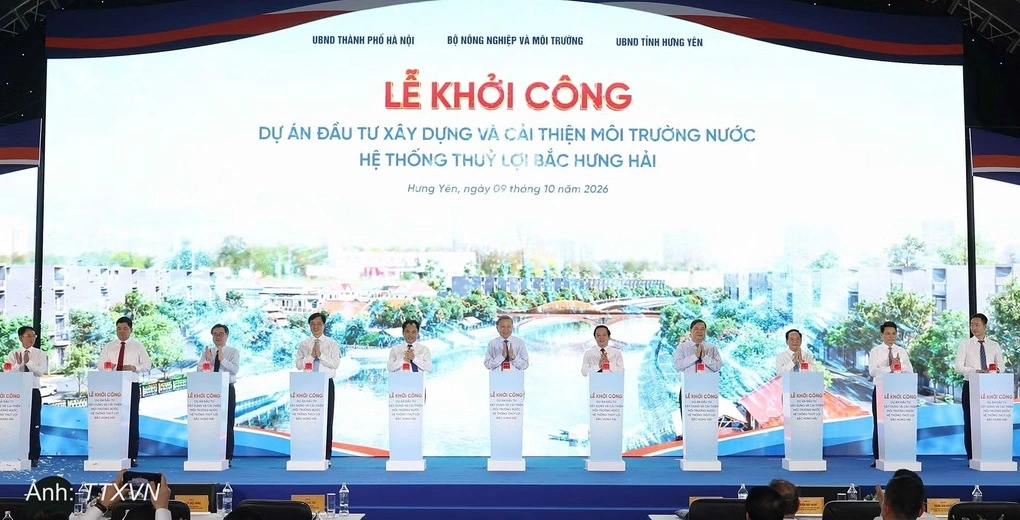
Minister of Agriculture and Environment Trịnh Việt Hùng said construction of the Bắc Hưng Hải system began on October 1, 1958, and that President Hồ Chí Minh visited it several times.
For nearly 70 years, the system has supplied water to about 116,655 hectares of farmland and aquaculture areas, provided domestic water for about 3.3 million people, and drained water from or protected about 198,995 hectares from flooding in Hanoi, Hưng Yên, Bắc Ninh and Hải Phòng.
The Bắc Hưng Hải modernization and water-quality project consists of three component projects.
Trịnh Việt Hùng said the ministry would ensure construction is safe, on schedule and up to standard, while increasing inspections and supervision and promptly addressing problems. The ministry will also work with local authorities on land clearance, technical infrastructure, pollution-source control and continued operation of the system's water supply and drainage functions during construction.
Sources: VnExpress

