
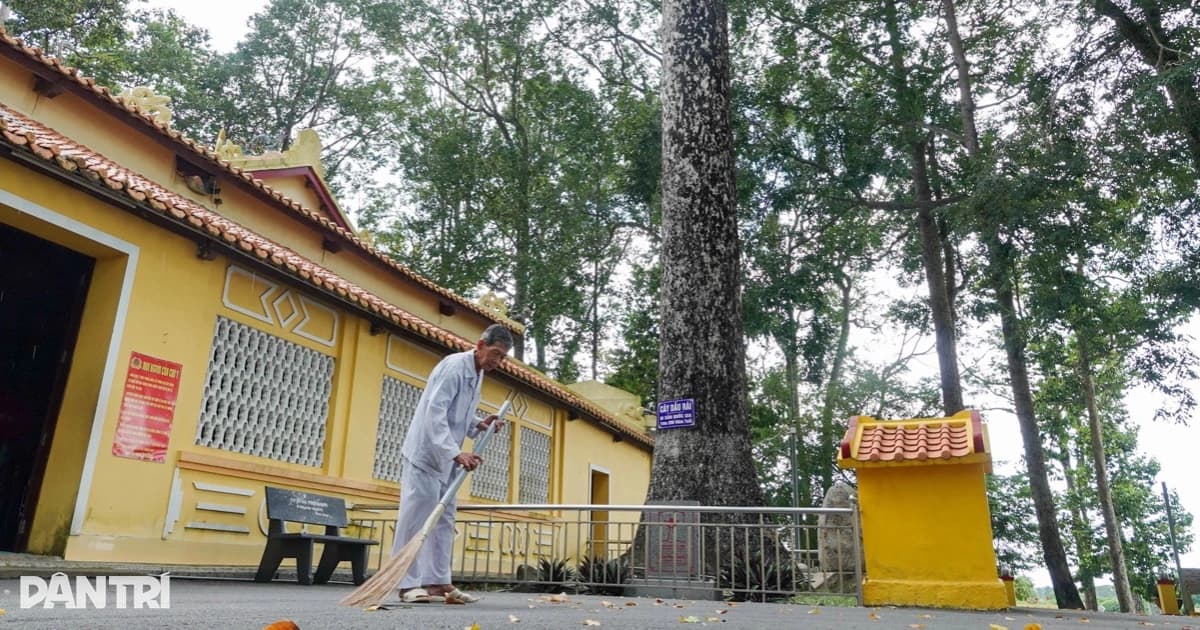
On the slope of Sập Mountain in Thoại Sơn Commune, An Giang Province, Thoại Ngọc Hầu Temple grounds are home to dozens of tall sao and dầu trees. One dầu rái tree is more than 200 years old and was recognised as a Vietnamese Heritage Tree.
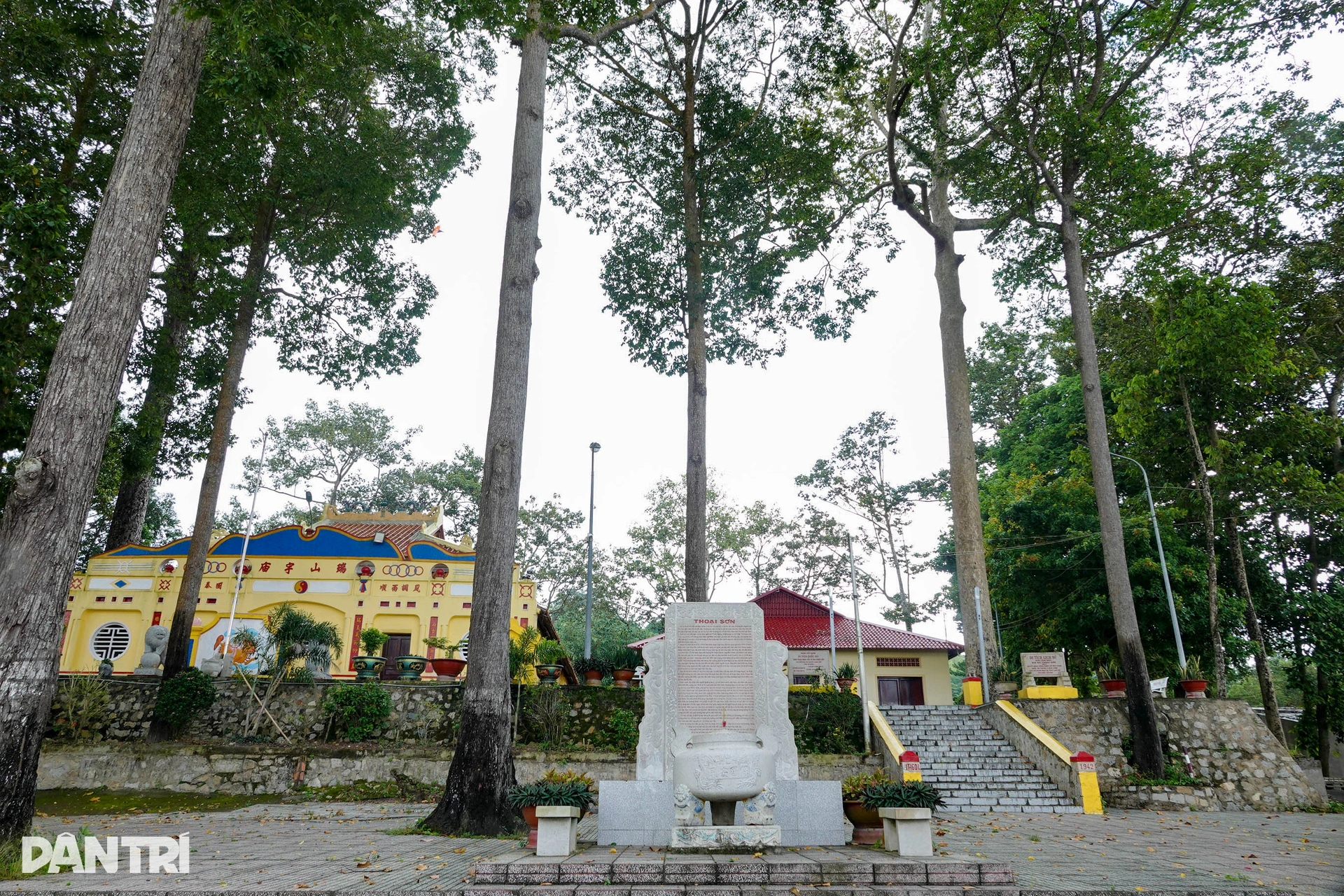
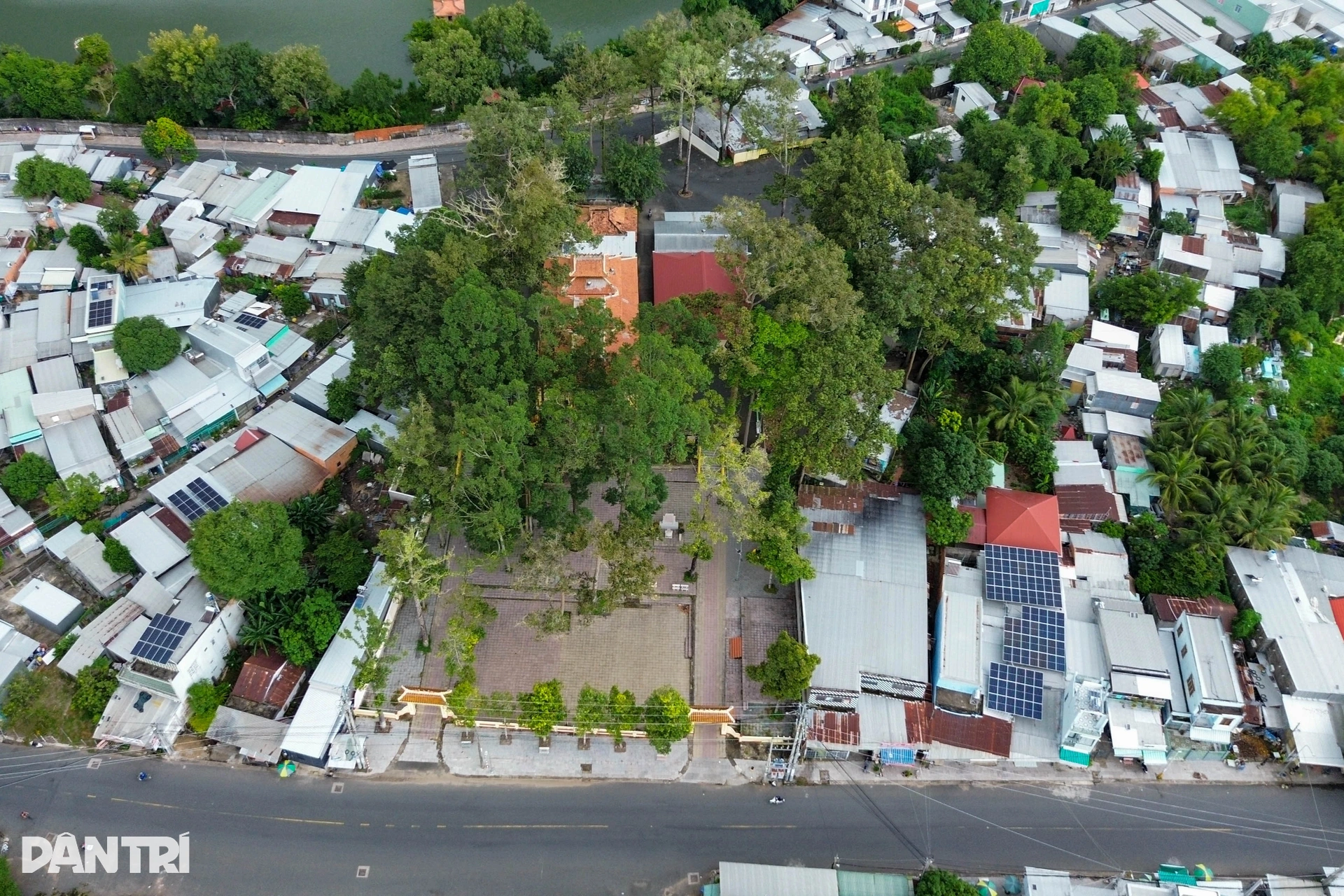
The old trees keep the temple grounds cool and airy throughout the year. Local residents and visitors come to the site, which is surrounded by a busy residential area.
Nguyễn Trung Nhựt, 79, who looks after the temple, said: “When I was a little over 10, I came to the temple with my grandfather to help clean it and had already seen this tree. Many years ago, a working team measured and assessed it and prepared documents for its recognition as a Vietnamese Heritage Tree.” The tree is about 30 metres tall and its trunk is about 1.4 metres in diameter.
The temple grounds also contain three giáng hương trees, one of which elders estimate to be more than 150 years old, along with 37 sao trees and 40 other dầu rái trees. They were planted at different times and are between 30 and 100 years old on average, forming an old green landscape.
Thoại Ngọc Hầu Temple is dedicated to Nguyễn Văn Thoại (1761–1829), a mandarin who helped develop the country’s southwestern borderlands. In 1818, to commemorate the construction of the Thoại Hà Canal, Thoại Ngọc Hầu wrote an inscription for a stone stele and built a temple near Thoại Mountain to house it. On September 28, 1990, the Thoại Sơn Stele was recognised as a national historical relic. The temple and stele are places where residents remember Nguyễn Văn Thoại’s contributions.
Nhựt said that sao and dầu trees were planted after the temple was built. Over several generations, they grew into the old tree system seen today. About three years ago, a dầu tree more than 100 years old died of old age. Its wood was given to the nearby Trúc Lâm monastery to make tables and chairs. The heritage tree is also in poor condition because the soil has gradually lost nutrients.
Before electricity became common, when kerosene was expensive, local residents used oil released from the dầu rái tree’s trunk for lighting. They made a small hole in the trunk, collected a small amount of oil and used it as fuel. The oil could provide light for several hours. After electricity reached the area, the practice stopped and caretakers began strictly protecting the tree. Cutting, drilling into the trunk or otherwise damaging it is prohibited.
Residents installed a drip-irrigation system to maintain the heritage tree, providing moisture and nutrients.
Last month, many branches dried out and broke. Caretakers pruned the old and weak branches and hired a drone to spray a tree-care product. The branches have since shown signs of new growth.
Trúc Lâm An Giang Monastery is next to Thoại Ngọc Hầu Temple. Construction began in 2017 and the monastery opened in 2022. It covers about 15 hectares and includes several Buddhist structures.
The temple area also has a Tam Quan gate, a main hall, bell and drum towers, and a meditation hall. The structures are mainly made of wood, stone and tiles, with hand-carved details. The monastery has two ponds and small landscaped areas adapted to the limestone terrain of Thoại Sơn.
The monastery’s ponds hold tens of tonnes of carp, including koi. Visitors can watch and feed the fish, and stone benches are placed around the ponds.
Sources: Dân Trí

