
Old Town and the Japanese Bridge
Begin near the Japanese Bridge, then walk to old trading houses and the Fujian Assembly Hall. UNESCO lists Hoi An for its preserved trading-town plan and blend of cultural influences. Some heritage buildings have ticket rules; check access and hours locally. Make time for the ordinary side lanes as well as the famous bridge.
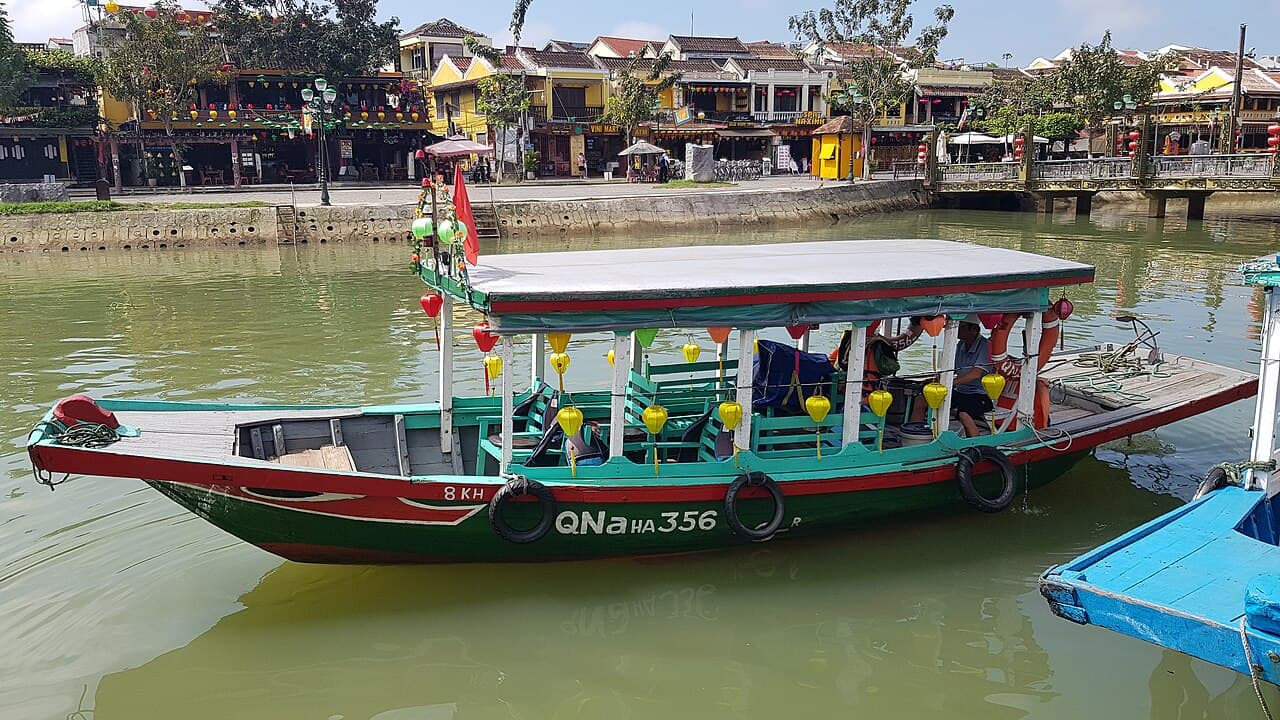
Thu Bon riverside
The riverbank is a good pause between historic blocks. Evenings bring more people, boats and stalls; visit earlier for a quieter view of the buildings. If you take a boat, agree on the duration and price before boarding. A boat ride is optional, not essential to understanding the town.
Tra Que and Cam Thanh
Beyond the compact centre, fields and waterways replace the dense streets. Cycle toward Tra Que for a slower rural route. Cam Thanh is known for water-coconut groves and basket boats. These are living neighbourhoods: respect private plots and choose an operator who explains the trip terms clearly.
An Bang and a second day
Give An Bang a separate morning by the sea. Wind and water conditions matter, so decide from the day’s weather. For two days, use the first for the Old Town and the second for fields, canals or beach. This leaves enough time to enjoy each stop.
Before you go
- Check heritage-house admission and any traffic restrictions in the old core.
- Carry water and sun protection; shade is limited on open streets.
- If cycling, inspect the bridge route and return before dark.
Places on the map
Questions and answers
What fits in one day?
The Old Town, Japanese Bridge, several historic buildings and the riverside.
Is An Bang worth visiting?
Yes if you have time for a separate beach trip and conditions are good.